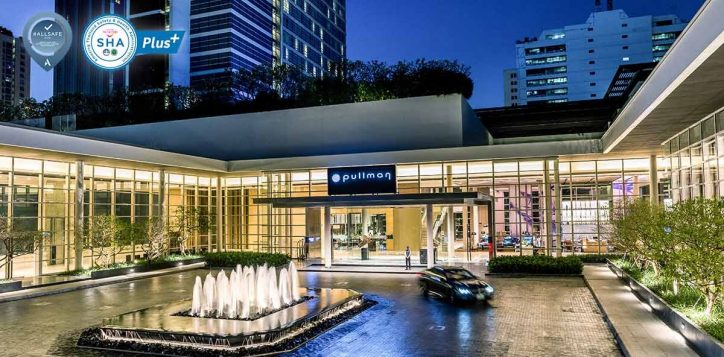
Pullman Bangkok King Power - Luxury hotel - Victory Monument Bangkok



Victory Monument Bangkok
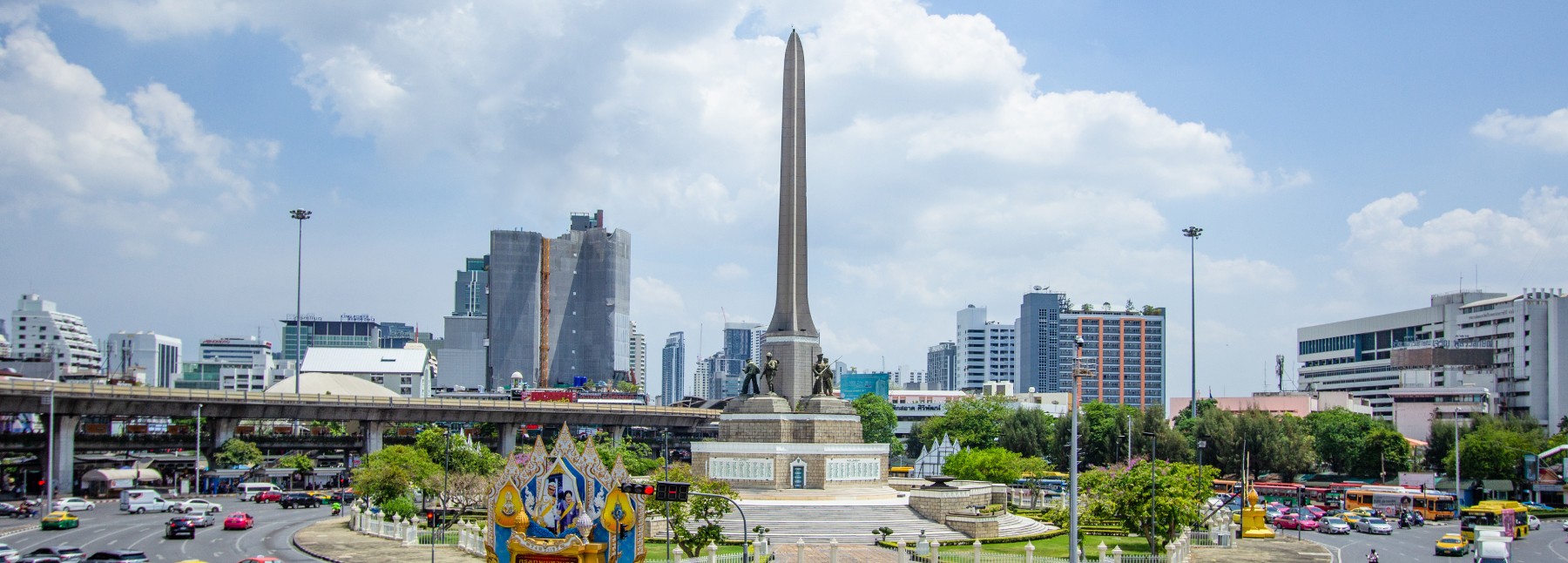
If you have ridden the BTS Skytrain through central Bangkok, you have almost certainly passed it: a tall stone obelisk standing in the middle of a busy traffic circle. This is the Victory Monument, one of the city’s most familiar landmarks. It stands in Ratchathewi district, where Phahonyothin, Phaya Thai and Ratchawithi roads meet, and today it is both a historic memorial and one of Bangkok’s busiest transport hubs.
Why the Victory Monument was built
The monument commemorates Thailand’s victory in the Franco-Thai War of 1940 to 1941, a brief conflict with French Indochina over territory Thailand had given up in earlier treaties. The war was seen at home as a success, and it ended with a ceasefire and the return of disputed land to Thailand.
To mark the victory, the government of Field Marshal Plaek Phibunsongkhram commissioned the monument to honour the soldiers, police and civilians who lost their lives. Construction began in June 1941, and the official opening ceremony was held on 24 June 1942.
Its Thai name, Anusawari Chai Samoraphum, translates as “the victorious battleground monument”.
The architecture and the five statues
The monument was designed by M.L. Pum Malakul, a leading Thai architect of the period, who combined modernist ideas with classical Western form. Its centrepiece is an obelisk roughly 50 metres tall, a shape long used around the world as a symbol of victory.
Around the base stand five large bronze statues, each representing a group that took part in the conflict:
- the army
- the navy
- the air force
- the police
- civilians
The figures are sculpted in the heroic style typical of public art of that era. The names of those who died are inscribed at the monument so that later generations remember them.
An officially registered heritage site
The monument’s historical importance was formally recognised when Thailand’s Fine Arts Department registered it as an official heritage site under the Act on Ancient Monuments, Antiques, Objects of Art and National Museums of 1961. The announcement is dated 4 February 2025 and was published in the Royal Gazette in March 2025.
The protected area covers roughly 3 rai 31 square wah, spanning the Thung Phaya Thai and Thanon Phaya Thai sub-districts of Ratchathewi. Registration means the monument is now protected and maintained as part of the nation’s historical heritage.
The Victory Monument today
Over the decades, the monument’s role has changed. What began as a military memorial has become the centre of daily life for a large part of the city. The area around it has grown into a busy district of hospitals and medical institutions, shopping centres, restaurants and residential buildings, and it remains an important economic area for Bangkok.
How to get to the Victory Monument
Few places in Bangkok are easier to reach, because the monument sits at one of the city’s main transport interchanges.
By BTS Skytrain
Take the Sukhumvit Line to Victory Monument station (N3), which opened on 5 December 1999. The station sits above Phaya Thai Road and connects to a skywalk that loops around the traffic circle, so you can reach every side without crossing the road.
By bus
The streets around the monument are served by a large number of city bus routes running to every part of Bangkok.
From the airport
Arriving from Suvarnabhumi Airport, the Airport Rail Link is close to the area and connects with the wider city rail network.
Exploring the Rang Nam area
Step down from the skywalk and you are in the Rang Nam area, a lively neighbourhood by day and by night.
- Victory Point sits beneath the skywalk and is a familiar meeting spot for people who live and work nearby.
- Local food — Rang Nam Road and the lanes around it are lined with local restaurants and street food, from quick single-dish meals to Thai desserts.
- Shopping — King Power Rangnam duty free is close by, and for the city’s major malls, Siam is only three BTS stops away.
When to visit and where to take photographs
The skywalk around the traffic circle is a popular spot for photographs, giving a raised view of the obelisk with the city’s traffic flowing around it. Late afternoon into early evening, as the city lights come on, is a good time for pictures.
To avoid the heaviest crowds, try to skip the weekday morning and evening rush hours.
Staying near the Victory Monument
If you plan to explore the area properly, staying close by makes it much easier to come and go. Find out more about hotels near the Victory Monument.
Frequently asked questions
When was the Victory Monument built?
Construction began in June 1941 and the official opening ceremony took place on 24 June 1942.
Who designed the Victory Monument?
The monument was designed by the Thai architect M.L. Pum Malakul.
How tall is the Victory Monument?
The obelisk stands roughly 50 metres tall.
What do the five statues represent?
They represent the army, navy, air force, police and civilians who took part in the Franco-Thai War.
Is the Victory Monument a heritage site?
Yes. The Fine Arts Department registered it as an official heritage site, in an announcement dated 4 February 2025.
How do I get to the Victory Monument?
The easiest way is the BTS Skytrain. Take the Sukhumvit Line to Victory Monument station (N3).
Is there an entry fee?
No. The monument is a public landmark and can be viewed from the skywalk and the walkways around it.
Access
Pullman Bangkok King Power ☆☆☆☆☆
8/2 Rangnam Road, Thanon-Phayathai, Ratchathewi , 10400 Bangkok
Thailand
Tel: +66 (0)2 680 9999
Fax: +66 (0)2 680 9998
Email:
H6323@accor.com